




A fold-down bench can turn an awkward narrow side yard into usable outdoor seating without permanently blocking the path. The key is to size the seat to the available clearance, attach the load-bearing parts to sound structure, and use supports that lock the bench firmly in its open position.
For a brick exterior wall, do not rely on mortar alone. Plan the bench around a properly anchored ledger or a freestanding support frame, then choose weather-resistant wood such as cedar and exterior-rated hardware. The four decisions below help create a compact bench that folds close to the wall between uses.
In this article
Plan Clearance Before Cutting Lumber

Image credit: youtube.com
Start by measuring the full width of the side yard, then mark the path you still need while the bench is open. A comfortable outdoor bench commonly needs roughly 16 to 18 inches of seat depth, but a tighter passage may call for a shallower custom seat.
Also measure the folded projection. A slim seat and low-profile legs keep the wall clearer, but the bench still needs enough depth and bracing to feel stable. Use painter’s tape or cardboard on the ground to test the open footprint before buying lumber.
Choose a bench length that leaves room at each end for walking, gates, drainage access, or utilities. Cedar is a sensible outdoor choice because it is naturally durable, though all cut ends and exposed hardware should be suited to exterior conditions.
Source: DIY Fold Down Bench Seat ~ Backyard Upgrades #1
Build a Rigid Seat Frame
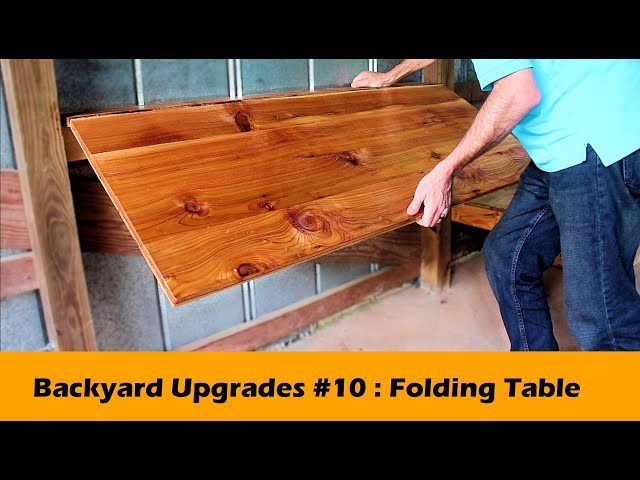
Image credit: youtube.com
Build the seat as a rigid frame first, then fasten the visible boards or slats across it. The frame carries the load; the top boards alone should not be expected to hold the bench together.
Set the slats with small, even gaps so rainwater can drain rather than collect on the surface. Sand eased edges before assembly, especially along the front rail, where legs and hands will make frequent contact.
Exterior-rated screws are a better choice than interior fasteners for a cedar bench. Pre-drilling near board ends helps reduce splitting and makes replacement easier if a weathered piece eventually needs to be changed.
Source: Simple Fold Down Table Bar DIY ~ Backyard Upgrades #10 – YouTube
Anchor Safely to Brickwork

Image credit: youtube.com
The wall connection is the part that deserves the most caution. Brick veneer, solid masonry, and framed walls behind brick can require different fastening approaches, so identify the wall construction before drilling.
A practical arrangement uses a sturdy horizontal ledger secured with masonry-rated anchors designed for the wall material, with the bench hinged below it. Avoid placing fasteners only in mortar joints, which can be weaker and prone to deterioration.
Use hinges and anchors rated for exterior use and for the expected load. If you cannot confirm that the brickwork is sound or select an appropriate anchoring method, ask a qualified local tradesperson before installing a seat that will carry people.
Source: Narrow Porch Fold Down Bench Ideas | Space-Saving Seating, Wall-Mounted Designs, & Hidden Storage
Add Supports That Fold Cleanly

Image credit: youtube.com
A folding bench needs positive support under the front edge, not just hinges at the wall. Folding legs, triangular swing-out braces, or heavy-duty locking shelf brackets can work, provided they are sized and installed for seating loads.
Test the movement repeatedly before calling the project finished. The bench should open without scraping the wall, sit level when supported, and fold flat without pinching fingers or catching on nearby trim.
Finish with a simple operating routine: lift the seat, fold the supports in completely, and lower it gently against the wall. Add a latch to keep it closed in wind, and inspect hinges, fasteners, and wood condition at the start of each outdoor season.
Source: Fold Down Bench Seating Clever Narrow Porch Designs Space Saving Outdoor Ideas 2025
Before making the final installation holes, assemble the bench frame and supports on a flat surface and dry-fit the setup at the intended wall height. Confirm the open walkway, level seat, and support action one more time.
Once the structure is secure, a small outdoor cushion can make the narrow patio more inviting—then tuck it away with the bench whenever the side yard needs to function as a clear passage again.
FAQ
How deep should a fold-down bench be in a narrow side yard?
Plan the depth around the clear walking path you need. About 16 to 18 inches is a common seating range, but a shallower bench may be more practical in a very tight passage.
Can I mount a folding bench directly to a brick wall?
Yes, if the masonry is sound and you use an anchoring method appropriate for the wall construction. Do not depend on mortar joints alone, and seek professional advice if the wall type or condition is uncertain.
What wood is suitable for an outdoor folding bench?
Cedar is commonly used outdoors because it handles weather well. Use exterior-rated fasteners and maintain the wood finish or protective treatment according to the product directions.
What keeps a wall-mounted bench safe while open?
Use supports that bear the front edge of the seat, such as folding legs, braced arms, or load-rated locking brackets. Hinges connect the seat to the wall but should not be the only load support.

