




Pull down upper pantry shelf inserts for short adults can make high wall cabinets far more usable without relying on a step stool. The best choice is not simply the widest organizer: it must fit the cabinet opening and depth, lower items to a comfortable height, and move smoothly under the load you plan to store.
Start by measuring the clear interior width, depth, and height of the cabinet, then consider how far the shelf travels outward as it lowers. The five options below show the main layouts to compare, from full two-tier systems to smaller organizers and conventional pull-outs.
In this article
Use Two Levels Without Overreaching

Image credit: amazon.com
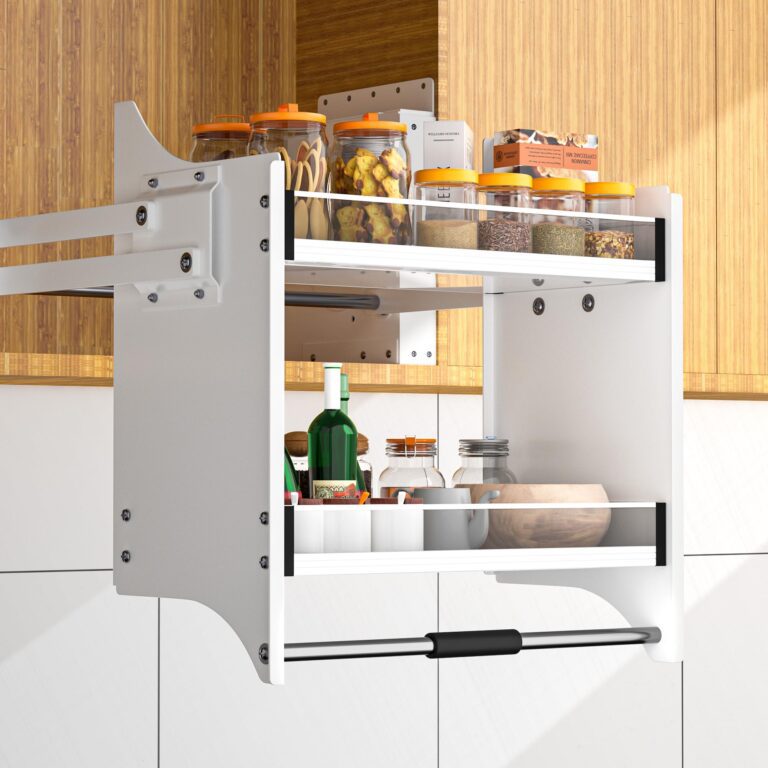
A two-tier pull-down insert is a practical starting point for a broad upper cabinet because it turns vertical space into two accessible storage zones. This SOFRON-style unit is listed for cabinet widths of 30 to 32 inches, so it belongs on the shortlist only after confirming the actual clear width inside the cabinet.
Reserve the lower basket for everyday goods and lighter containers, with less-frequent items above. Before buying, check the door clearance and allow room for the mechanism to swing down and forward; a shelf that fits on paper can still be awkward if it meets the cabinet door or nearby countertop items.
Match the Frame to Cabinet Width

Image credit: amazon.com
This 30- to 32-inch upper-cabinet organizer has a similar two-level approach, but its chrome-steel construction highlights an important comparison point: the frame and mounting points need to suit the cabinet, not just the opening width. Measure the opening at its narrowest point, especially where hinges, face frames, or trim reduce usable space.
For shorter homeowners, a controlled lowering action matters more than the amount of storage alone. Load heavier pantry staples low and toward the back of each basket where the system is designed to carry them, and avoid packing one side much more heavily than the other.
Prioritize a Longer Reach Reduction

Image credit: shelvesthatslide.com
Some pull-down systems state their travel dimensions clearly, which makes reach planning much easier. The Rev-A-Shelf 5PD system is described as lowering contents 10 inches and pulling them outward 14 3/4 inches, helping bring stored goods closer to the front of the cabinet.
It is also offered for 24- and 36-inch wall cabinets, with specific opening requirements. A gas-assisted mechanism and arms that lock in the lowered position can support steadier access, but cabinet depth and interior height remain essential measurements. Compare the published minimum depth and height with the unobstructed space inside your own cabinet before ordering.
Source: Wall Cabinet Pull-Down Shelving System
Pair High Storage With Pull-Outs

Image credit: wellborn.com
A pull-out shelf does not lower from an upper cabinet, but it solves a related problem: losing items at the back of deep storage. Use this layout where the issue is depth rather than height, such as a lower pantry cabinet or a reachable shelf that is difficult to see into.
For a more ergonomic pantry plan, place daily-use supplies in pull-outs between waist and shoulder height, then use a pull-down insert above for lightweight backups. This division reduces overhead reaching and keeps the high cabinet from becoming a place where food disappears behind taller containers.
Source: Pull-Out Shelves For Kitchen Cabinets | Wellborn Cabinet
Choose Compact Storage for Small Goods

Image credit: walmart.com
A narrower pull-down organizer can be useful for spices, packets, tea, and other small pantry items that tend to get buried. The shallower storage profile also encourages a lighter load, which is sensible for an upper-cabinet mechanism that must be lowered and raised regularly.
Keep containers short enough that they do not interfere with the shelf above or cabinet door. Grouping items by use—baking, breakfast, sauces, or seasonings—makes the lowered shelf quicker to scan and prevents the organizer from becoming another hard-to-reach catchall.
Source: Upper Cabinet Pull Down Shelves for Home Storage
Make a simple cabinet worksheet before shopping: record clear width, depth, interior height, door style, and the height where you can comfortably reach without stretching. Then compare those measurements with each system’s installation requirements and travel path.
Choose a two-tier pull-down insert for broad upper cabinets, a compact organizer for small goods, and pull-out shelves for deep lower storage. Keeping the heaviest and most-used items at easier heights will make the whole pantry safer to use.
FAQ
How do I measure for a pull-down pantry shelf insert?
Measure the clear interior width, depth, and height of the cabinet, not the outside dimensions. Note face frames, hinges, shelves, and door swing that may reduce usable space.
What should go on a pull-down upper shelf?
Use it for lightweight to moderately weighted pantry items, grouped in stable containers. Put frequently used goods on the lower tier and avoid uneven loading.
Are pull-down shelves the same as pull-out shelves?
No. Pull-down shelves lower and usually move forward from an upper cabinet. Pull-out shelves slide outward, typically from lower or mid-height cabinets, to expose items at the back.

