






Learning how to style a small concrete patio in 15 minutes starts with a simple rule: cover the hard surface, create one inviting seat, then add light and greenery. Skip projects that require curing, drilling, or a shopping trip. A weather-ready rug, a folded throw, battery-powered string lights, and a few potted plants can make a bare slab feel intentionally prepared before guests arrive.
Work from the center outward so the patio remains easy to move through. Choose a small palette—two or three colors plus green—and use what you can carry outside in one or two trips.
In this article
Start With an Anchored Seating Zone

Image credit: reinventeddelaware.com
Give a small patio a clear purpose before adding accessories. Place two chairs facing each other or angle them toward a small table, leaving a direct path to the door and yard.
A compact outdoor rug can define that zone quickly, even on plain concrete. Choose one large enough for chair front legs to rest on; it makes separate pieces read as one gathering spot.
For a last-minute setup, add a throw only where someone will actually use it. One draped blanket per chair looks relaxed and avoids crowding the limited seating area.
Source: How to Paint and Stencil a Concrete Porch in 5 Easy Steps | Reinvented Delaware
Use One Rug to Soften Concrete

Image credit: bhg.com
Concrete can feel visually flat, so establish warmth underfoot first. A low-profile outdoor rug introduces color and pattern without taking up usable floor space.
Center it under the conversation area rather than pushing it against a wall. This creates a deliberate boundary and helps a compact patio feel like an outdoor room rather than a leftover strip of paving.
Brush off leaves and grit before rolling it out. A clean perimeter matters as much as the textile, particularly when guests are arriving soon.
Source: 30 Small Patio Ideas That Level Up Your Outdoor Space
⚠️ Source unavailable — description based on the image only.
Build Calm Around a Central Table

Image credit: bhg.com
A single central surface gives guests a place to set down a drink, phone, or small snack plate. Use the smallest stable table you have, keeping it within easy reach of every seat.
Resist filling the tabletop with decor. A tray, lantern, or small planter is enough; leaving open space makes the patio useful from the first conversation onward.
If your table is larger than the patio needs, shift it to one side and let it act as a serving station. The goal is a clear circulation route, not a tightly packed furniture layout.
Source: 20 Concrete Patio Ideas for a Cozy Outdoor Retreat
⚠️ Source unavailable — description based on the image only.
Layer Comfort Without Blocking Movement

Image credit: bhg.com
Comfort comes from a few touchable layers, not from adding every outdoor accessory at once. Put seat cushions in place, add one or two pillows, and keep extras in a basket or indoors until they are needed.
On a narrow slab, choose furnishings with visible legs or an open profile. They allow more of the floor to show, which keeps the setting from feeling boxed in.
Before guests arrive, take one step back and check the walking path. Move anything that catches a foot—planters, baskets, spare stools—to the edge.
Source: 40 Cheap Backyard Ideas for Outdoor Spaces Large and Small
⚠️ Source unavailable — description based on the image only.
Create a Portable Evening Glow

Image credit: bobvila.com
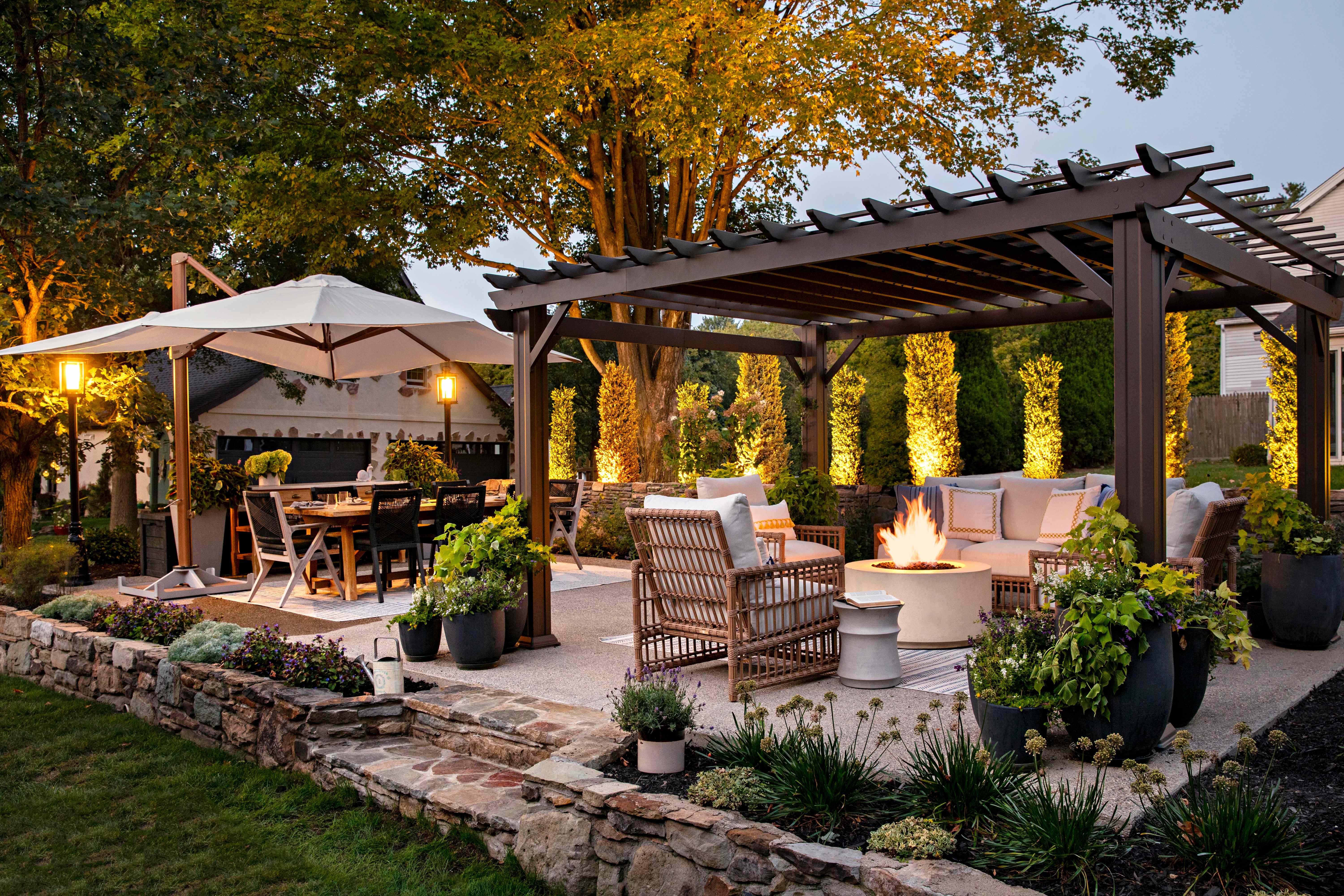
For a quick evening update, use battery-powered string lights rather than relying on an outlet or permanent installation. Drape them along a railing, fence line, umbrella edge, or nearby branch only where they can be secured without obstructing a walkway.
Keep lighting low and warm in feel by concentrating it near the seating zone. Add a battery lantern on the table or ground beside a chair if a second layer is useful.
Check that fixtures are intended for outdoor use and follow their care instructions. Bring portable lights inside after the gathering if the weather changes.
Source: 10 Ways to Dress Up a Drab Concrete Patio – Bob Vila
Choose a Cohesive Color Thread

Image credit: idealhome.co.uk
A small patio feels more composed when its colors repeat. Pull one shade from a rug or cushion and echo it in a planter, throw, or tabletop item instead of introducing several unrelated accents.
Concrete is a neutral base, so black, warm white, muted blue, terracotta, and leafy green can all work. Limit the quick refresh to a restrained combination that suits what is already outside.
This approach also speeds up decisions. Gather only the items that fit your chosen palette, then return the rest indoors rather than testing multiple arrangements.
Source: Concrete patio ideas to turn yours into something special | Ideal Home
Cluster Pots for Instant Definition

Image credit: schahnconstruction.com
Grouped planters do more than add greenery: they give the edge of a concrete patio a softer transition to the garden or wall. Use pots of different heights, but keep them close enough to read as one cluster.
Place the tallest container at the back or in a corner, with lower pots stepping forward. This adds depth without creating a line of obstacles around the perimeter.
Use plants already in portable containers for this 15-minute plan. Avoid repotting, digging, or treating the plants as a fast decor project; simply arrange healthy pots where they frame the seating area.
Source: Concrete Patio Ideas for Your Backyard | Schahn Construction
Frame the Patio With Greenery

Image credit: livingetc.com
On a small patio, greenery is most effective at the edges. A pair of pots by the entry, a grouped corner cluster, or a planter beside the seating area can make the concrete boundary feel less abrupt.
Leave the center open for people. Plants should frame the view and soften hard lines, not compete with chairs or turn the patio into a storage area for containers.
For an impromptu gathering, favor foliage over fussy arrangements. Varied leaf shapes and heights provide enough texture without requiring floral styling or new purchases.
Source: Small garden ideas – 21 ways to elevate a tiny outdoor space |
Keep One Clear Guest Path

Image credit: bhg.com
The quickest way to make a compact patio guest-ready is to protect its route in and out. Start at the door, walk through the setup, and relocate anything that forces people to sidestep around it.
Arrange the seating zone to one side if necessary, then use the opposite edge for plants or lighting. A deliberately open strip makes the whole area feel more generous.
Finish with a quick surface reset: sweep the concrete, clear abandoned pots or tools, and remove clutter from tabletops. Clean negative space is a useful styling element.
Source: 13 Big Ideas to Make Your Small Backyard Better
⚠️ Source unavailable — description based on the image only.
Set Out a Simple Welcome Surface

Image credit: concretepalmetto.com
Make the final minute count by preparing one functional landing spot. A small table, tray, or sturdy stool can hold napkins, drinks, and a lantern without requiring a full outdoor dining setup.
Keep the surface edited: one light source, one practical item, and room for guests to use it. A crowded table makes a small patio feel busier than it is.
Then do a comfort check. Straighten cushions, shake out the rug, switch on the battery lights, and place any extra throws where people can reach them easily.
Keep a small patio refresh kit together: an outdoor rug, a pair of throws, battery string lights, a lantern, and a few lightweight planters. With those pieces close at hand, the setup becomes a simple sequence rather than a rushed search through storage.
Before the next visit, try the 15-minute order once—sweep, rug, chairs, plants, light, and tabletop. You will know exactly what fits your space and what can stay put.
FAQ
What should I put on a small concrete patio first?
Start with the seating arrangement and an outdoor rug. Those two elements establish the usable zone and make later additions easier to place.
How can I add patio lighting without an outlet?
Use battery-powered string lights or a battery lantern rated for outdoor use. Secure lights away from walking paths and follow the manufacturer’s instructions.
How many plants work on a small patio?
A few grouped containers usually have more impact than many scattered pots. Keep the center and entry path clear, then use plants to frame corners or edges.

