







To line wire pantry shelves cheaply, use rigid foam board as the base and cover it with wipeable plastic placemats or shelf liner. The firm layer bridges the gaps in wire racks, so cans, packets, and narrow containers have a level surface instead of tipping or slipping through.
Start with accurate measurements, cut each panel slightly inside the shelf edges, and test-fit before covering it. This low-cost approach is removable, easy to clean, and flexible enough for a rental pantry or a quick organization reset.
In this article
Measure for a clean fit

Image credit: heydonna.com
Clear one shelf at a time and measure its usable width and depth. Measure inside any shelf supports rather than assuming the whole rack is a rectangle; wire shelving can have brackets, angled corners, or a front lip that affects the final fit.
Transfer those measurements to foam board and cut conservatively. A panel that is a fraction smaller than the rack is easier to set in place and remove for cleaning, while an oversized panel can bow at the edges.
Before buying materials for every shelf, make one test panel. It confirms your measurements and lets you see how much support the wire spacing provides.
Source: Cover Wire Shelving – A Cheap and Easy Fix – Hey, Donna!
Build a stable shelf foundation
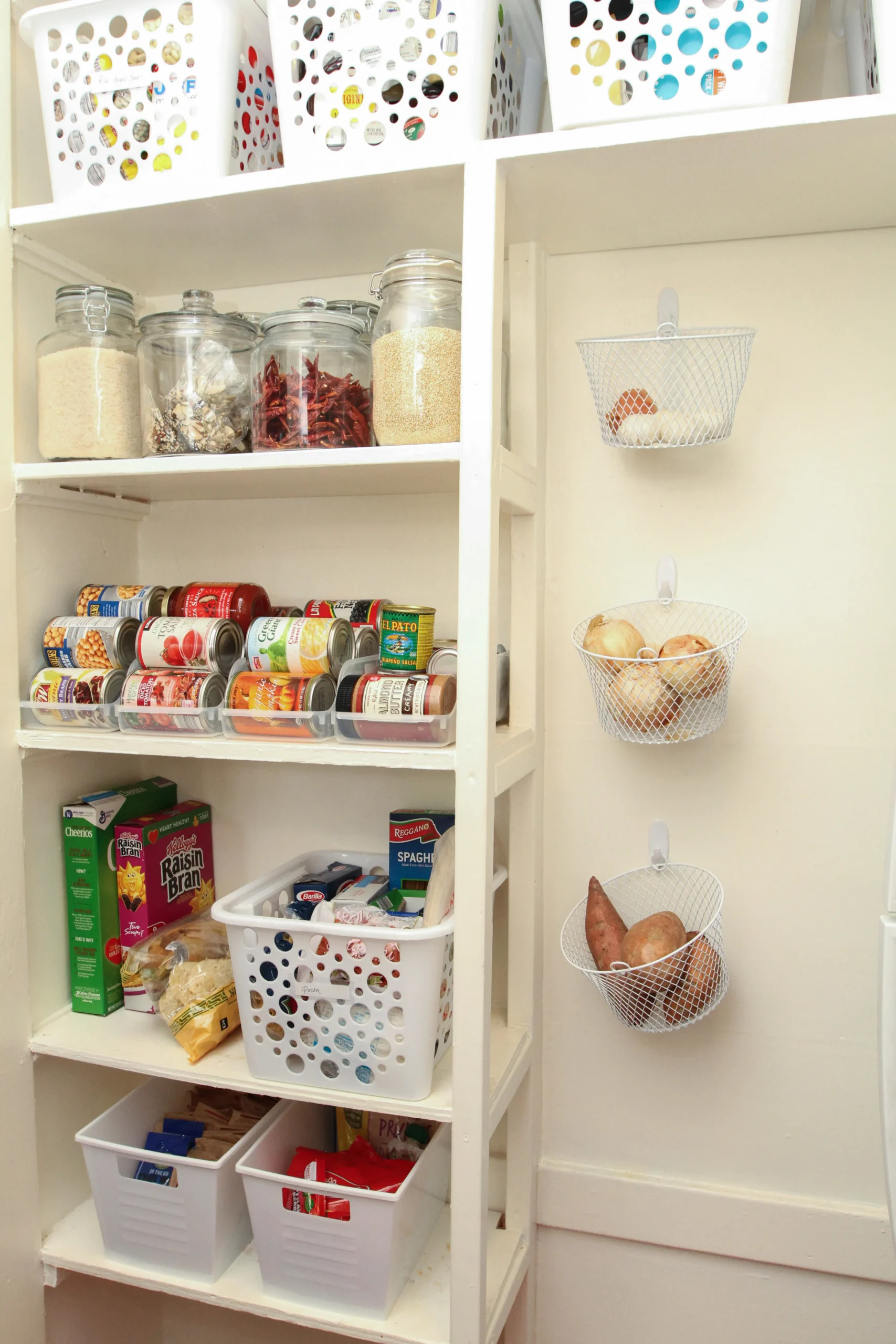
Image credit: apartmenttherapy.com
Foam board provides the rigidity that thin shelf liner alone cannot. Place the cut board directly on the wire rack so it spans the openings and creates a continuous base for jars, boxes, and small pantry staples.
Keep the material choice practical. A lightweight board is best suited to ordinary pantry goods, not unusually heavy appliances or bulk containers. Put the heaviest items where the existing shelf is strongest, and do not exceed the shelving system’s intended load.
If one board is not wide enough, join pieces on a supported portion of the rack rather than leaving a seam over an open gap. Test the surface with a few everyday items before fully restocking.
Source: Dollar Store Pantry Organizer Tips | Apartment Therapy
Add a wipeable finished surface

Image credit: thehappyfarmhouse.com
Covering the foam board gives the shelf a more finished appearance and makes routine cleanup simpler. Flexible plastic placemats can work as a durable top layer; decorative shelf liner is another option if it lies flat and is secured smoothly.
Trim the covering after the board has been test-fitted. Leave no loose corners that could catch on baskets or lift as containers are pulled forward. If using adhesive material, smooth from the center outward to reduce bubbles and wrinkles.
A wood-look finish can soften the appearance of white wire racks, but function should lead the choice. Select a surface that can be wiped clean and that will not make containers slide too easily.
Source: DIY – Covering Wire Shelves in the Pantry – The Happy Farmhouse
Give loose staples defined homes

Image credit: organizedmarie.com
Once the shelf surface is smooth, group smaller items in bins, baskets, or trays. This keeps packets and pouches from spreading across the shelf and makes it easier to lift out a whole category rather than searching behind taller packages.
Reserve clear containers for items you want to check at a glance, and use opaque bins for less attractive but useful backstock. Keep frequently used foods at an easy-to-reach height and place lighter extras higher up.
Leave a little open space instead of filling every inch. A pantry system is easier to maintain when there is room to put groceries away without rearranging everything first.
Source: pantry-organization-wire-shelves-1 – Organized Marie
Restock with everyday access in mind
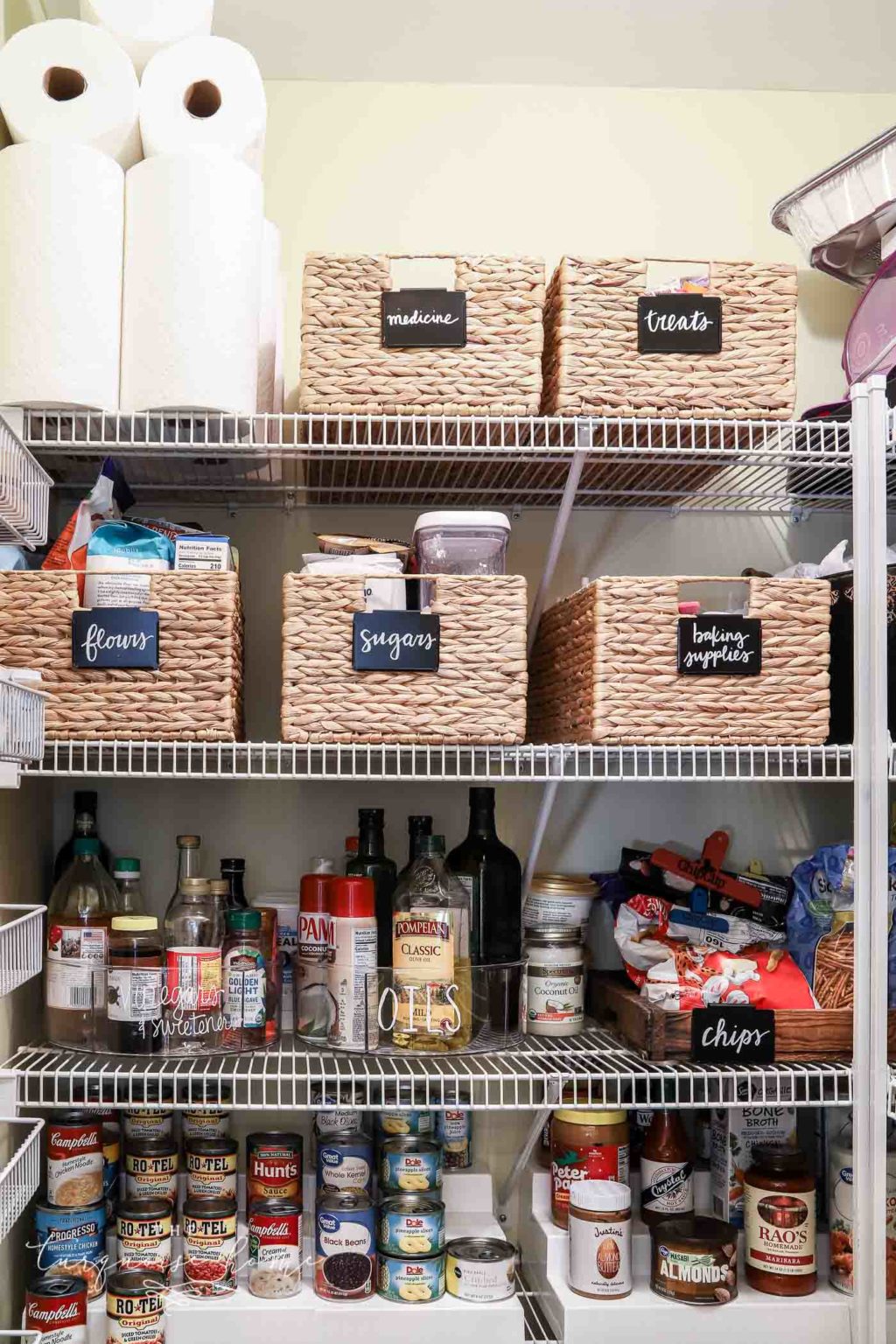
Image credit: theturquoisehome.com
Return pantry goods by how often they are used, not just by size. Everyday breakfast items, snacks, and cooking staples belong where they can be reached quickly; specialty ingredients and refills can occupy less convenient shelves.
Use the newly level surface to create simple zones, such as baking, canned goods, snacks, or meal components. Containers can help define those zones, but labels and matching bins are optional—the arrangement should make sense to the people who use the pantry.
After a week, notice what still migrates or falls over. Moving one category, adding a small bin, or shifting a tall container can solve more than buying another organizer.
Source: How to Organize a Pantry – The Turquoise Home
Make one foam-board shelf cover first, then live with it for a few days before committing to the rest of the pantry. If it sits flat, wipes clean, and keeps smaller items steady, repeat the same measured process shelf by shelf.
Finish by assigning simple zones and keeping the heaviest goods on the most supported shelves. The result is a smoother pantry surface built from inexpensive, replaceable materials.
FAQ
What is the cheapest way to cover wire pantry shelves?
Rigid foam board is a low-cost base because it bridges the wire gaps. Cover it with plastic placemats or shelf liner if you want a wipeable finish.
Can I use shelf liner by itself on wire shelves?
Thin shelf liner may follow the shape of the wires and still allow small items to tip. Use a rigid board underneath when you need a flatter, more stable surface.
How do I keep a foam board shelf cover from shifting?
Cut it to fit just inside the shelf edges and test it under everyday pantry items. If needed, use a removable non-slip layer that does not interfere with the shelf supports.