






To set up a smokeless patio seating area that protects business attire, start with a fire feature designed to minimize smoke, then place seating outside its likely smoke path. Leave open routes for air to move, avoid trapping heat and fumes beneath a low cover, and give guests a clean, practical place to set down drinks and outerwear.
The goal is not merely a polished patio. It is an evening hosting space where jackets, dresses, and work clothes can remain comfortable and presentable from arrival through the last conversation.
In this article
Create Cover Without Trapping Smoke

Image credit: cbsolarshading.co.uk
A covered patio makes professional evening hosting more dependable, especially where temperatures drop or light rain is possible. Choose a structure with adjustable louvers, open sides, or enough roof height to prevent the seating area from becoming a pocket for lingering heat and smoke.
Put the fire feature beyond the main sheltered conversation zone rather than directly under a fixed canopy. This preserves the comfort of cover while giving combustion byproducts a clearer route away from guests and their clothing.
Keep the most formal seats nearest the house or at the most protected end of the layout. That creates a natural clean-clothes zone for arrivals, dining, and conversations before anyone chooses to sit near the fire.
Source: Covered Seating Area in Garden: Ideas, Options & Inspiration | Caribbean Blinds
Choose a Cleaner Fire Experience
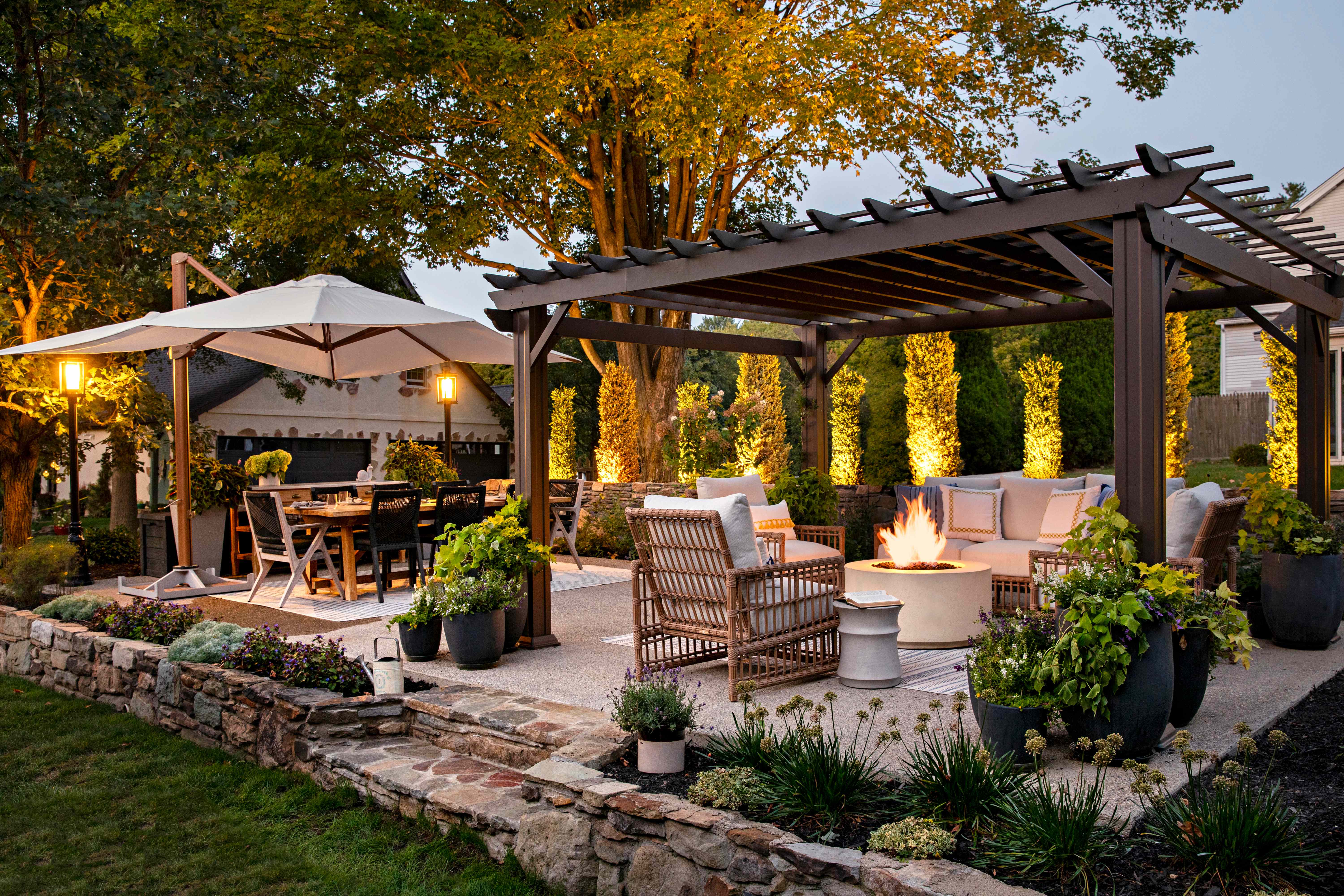
Image credit: bhg.com
For the lowest chance of smoky fabric, consider a gas fire table, electric heater, or a purpose-built smokeless fire pit used exactly as its manufacturer directs. No open flame is entirely without risk, but cleaner-burning options can reduce the drifting smoke associated with damp wood, poor airflow, and a struggling fire.
Position the heat source as an optional destination, not the center point every guest must pass. A separate lounge cluster lets people warm up briefly, then return to a fresher seating area for food and conversation.
Before hosting, check local rules, the appliance instructions, clearances, and the safety requirements for your patio surface and cover. Outdoor use and ventilation still matter, even with low-smoke equipment.
Source: 31 Firepit Ideas That Will Transform Your Backyard into a Go-To Hangout
⚠️ Source unavailable — description based on the image only.
Give Airflow a Clear Route

Image credit: jordecor.com
Airflow should shape the plan before furniture is moved into place. Notice where the breeze usually travels at the time you host, then set the fire feature downwind of the primary seating so smoke has less reason to cross the group.
A simple test helps: use lightweight ribbon or observe a small, safe flame-free airflow indicator on a breezy day. Conditions change, so retain enough flexibility to shift a chair grouping or direct guests to the clearer side as the wind turns.
Avoid boxing the fire into a tight courtyard of solid walls, dense screens, and furniture. Fire safety clearances and the product manual should always determine how close any seating, planting, or structure can be.
Source: DIY Fire Pit Area in a Weekend! – Jordecor
Use Privacy Screens With Restraint

Image credit: realestatespice.com
Privacy layers can make a work-adjacent gathering feel relaxed, but they should not become a windbreak that holds smoke around the seats. Use screens to shield sightlines at the perimeter, leaving the side closest to the fire’s downwind path open where feasible.
Moveable curtains, slatted panels, and spaced planting offer more control than a fully enclosed arrangement. On still evenings, open them wider; on a breezy night, use only the panels that improve comfort without redirecting air toward guests.
Choose outdoor textiles that are easy to wipe or launder, and keep pale, delicate cushions away from the fire-side seats. A tailored look can still be practical when materials are selected for regular hosting.
Source: The Patio Rule of 3 Privacy: The Simple Formula to Create a Private Patio Space
Build a Conversation-First Layout

Image credit: tollbrothers.com
Arrange the patio in zones: a clean conversation area, a dining or drinks surface, and a separate warming spot. This makes the fire an amenity rather than an unavoidable source of heat, ash, or odour.
Face chairs toward one another in small groups instead of lining every seat toward the flame. Guests in business attire can choose a comfortable distance without being isolated from the conversation.
Leave generous walkways between the door, serving area, and seating. Clear movement reduces accidental contact with soot-prone surfaces and gives hosts room to offer blankets, refreshments, or a fresh seat if the wind changes.
Source: How to Arrange Patio Furniture for Outdoor Living | Build Beautiful
Protect Fabrics Through Small Details
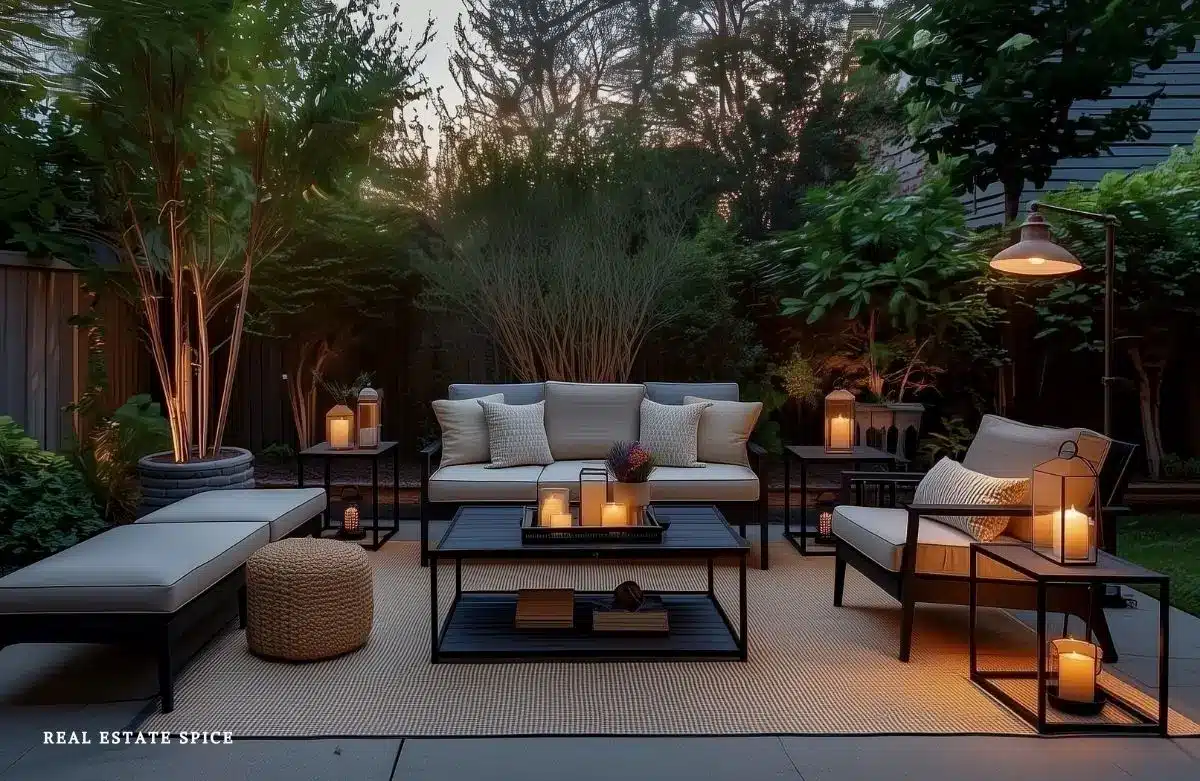
Image credit: realestatespice.com
Think beyond smoke when protecting business attire. A stable side table keeps drinks from balancing on chair arms, while a tray near the entry gives guests a place for bags or folded jackets away from food, damp cushions, and the fire area.
Select smooth, easy-clean seating covers and check that cushions are dry before guests arrive. Keep spare throws close by for warmth, but store them away from the fire so they do not pick up smoke before anyone needs them.
Soft perimeter planting and a privacy fence can help define the lounge without crowding it. Maintain clear separation between vegetation and any heat source, following the appliance guidance and local fire-safety requirements.
Source: How to Create a Private Patio Area
Set up the patio before the first guest arrives: check the wind, inspect cushions for dampness, confirm fire-feature clearances, and place the best-dressed seating in the cleanest part of the layout. If conditions turn still or smoky, make the covered conversation zone the main gathering place and treat the fire as optional.
A well-hosted outdoor lounge gives people choices—warmth, shelter, privacy, and a seat that does not leave them worrying about their clothes.
FAQ
Is a smokeless fire pit completely smoke-free?
No. A smokeless model can reduce visible smoke when used correctly, but wind, fuel, moisture, and operating conditions can still affect the air around it.
Where should seating go around a patio fire feature?
Place the main seating outside the usual downwind path, keep clear walkways, and follow the fire feature manufacturer’s required clearance distances.
Can a fire pit go under a covered patio?
Only if the specific product is approved for that setting and all instructions, ventilation needs, and clearance requirements are met. Many fire features are not suitable beneath covered structures.
What is the best patio seating material for evening hosting?
Choose outdoor-rated, easy-clean upholstery or removable covers, with stable tables nearby for drinks and personal items. Keep fabrics dry and away from the heat source.