






A child safe convertible ottoman storage coffee table for small living rooms can replace several hard-working pieces at once: a place to rest feet, a surface for daily use, and a contained home for toys. The best choice is not simply the smallest one. It should leave clear walking space, have upholstery that feels forgiving around active children, and offer a lid design adults can manage safely.
Use the options below to compare shapes, tabletop styles and storage access. Before ordering, check the current product specifications for dimensions, lid support, weight limits and care instructions.
In this article
Keep circulation paths comfortably clear
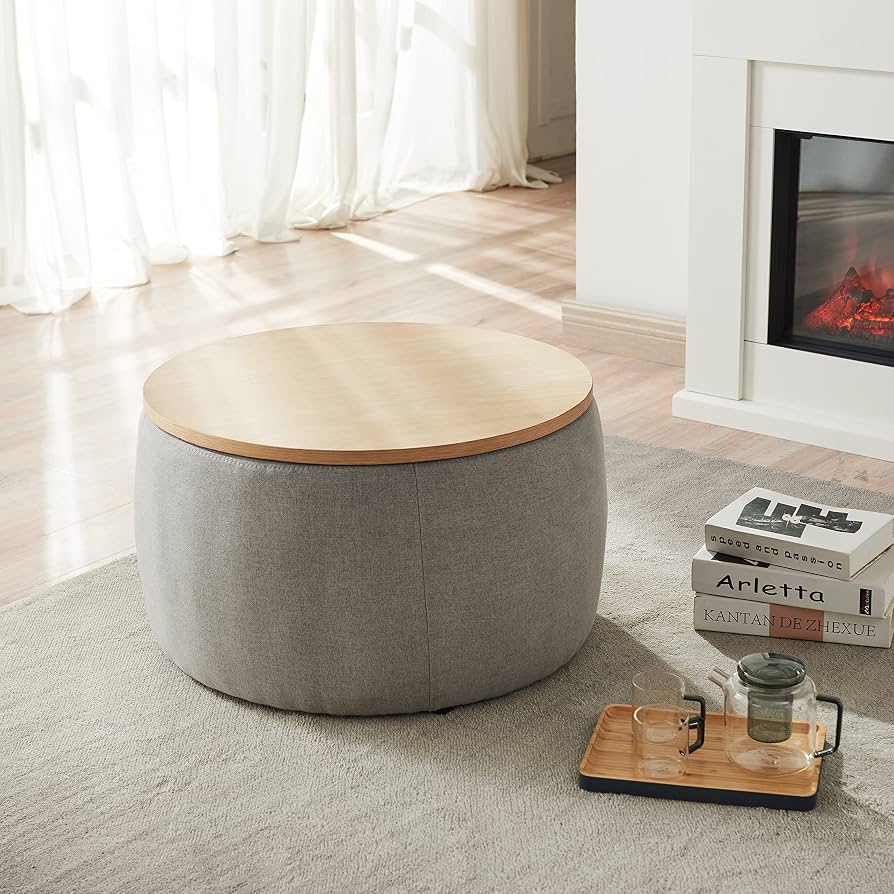
Image credit: amazon.com
A compact round ottoman can be easier to live around than a square coffee table in a tight seating area. Its curved perimeter removes sharp corners from the main path between sofa, doorway and play space, while a dark neutral cover can sit quietly with many room palettes.
Start with the footprint, not the storage promise. Mark the intended diameter on the floor with tape, then walk around it with the sofa and chairs in place. Leave enough room for an adult carrying a child or a laundry basket to pass without repeatedly shifting the table.
A removable or lift-off top deserves extra attention in a toddler household. Put it away or secure it when storage is being accessed, and avoid treating an unsecured top as a climbing surface.
Use nesting pieces with a plan

Image credit: walmart.com
A two-piece storage ottoman arrangement can make a small living room more flexible. Keep the larger piece as the everyday center table, then pull out the smaller one for snacks, a visiting child, or an extra footrest. Nesting them afterward restores valuable floor area.
This approach works best if each ottoman has a defined job. Reserve one compartment for frequently used toys and the other for throws, board books or seasonal items, so the family does not need to open both pieces during every tidy-up.
Check how each lid opens before relying on a set for young children. Separate removable tops, lightweight pieces and gaps between nested furniture can all require close supervision during play.
Balance tabletop use with soft seating
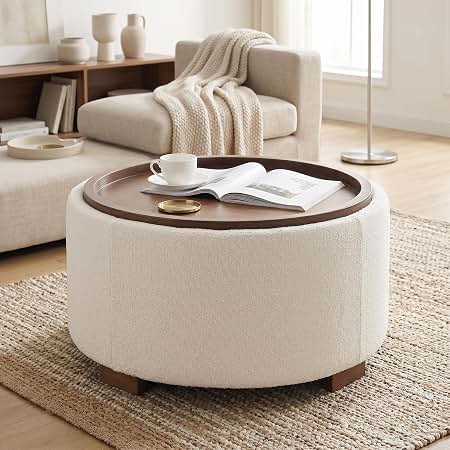
Image credit: amazon.com
A larger upholstered ottoman can create a generous central surface without the hard profile of a conventional coffee table. This style is useful for families who want one piece to handle feet-up lounging, occasional trays and concealed living-room storage.
Tufting adds texture, but it also creates seams worth inspecting. Look for secure stitching, a surface that is easy to vacuum around, and a cover that suits the reality of spills and sticky hands. A tray can provide a steadier spot for drinks than a cushioned lid.
For child safety, focus on the mechanism rather than the word “lift.” Confirm that the lid stays supported in its open position, closes predictably, and does not create an accessible pinch point. Keep children from opening and closing it independently unless the manufacturer specifically indicates that design is appropriate.
Make a reversible lid work harder

Image credit: homedepot.com
A reversible lid offers a practical division between soft lounging and a firmer table surface. Turn the usable side upward for a tray, craft supplies or a family game, then restore the upholstered side when the room needs to feel calmer and more relaxed.
Chenille has a plush feel, yet a textured fabric needs routine care in an active home. Vacuum gently with an upholstery attachment, follow the maker’s cleaning guidance, and address spills promptly rather than rubbing them deeper into the pile.
The raised-leg design can make floor cleaning easier, but measure the clearance around the legs and beneath the ottoman. Small toys can roll under furniture quickly, so a simple retrieval plan matters as much as the storage compartment itself.
Choose a stable surface for daily tasks
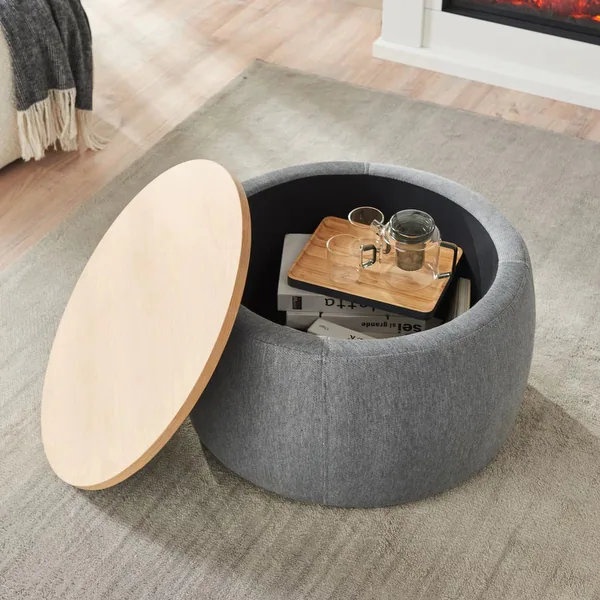
Image credit: bedbathandbeyond.com
A fabric drum ottoman paired with a removable wooden top gives a small room a clearer coffee-table function. The hard top can hold a serving tray, remote controls or a puzzle in progress, while the upholstered base softens the room’s central gathering spot.
Assess the top as its own component. It should sit flat, feel stable during ordinary use, and have edges that do not introduce a new hazard at toddler height. A removable top also needs a designated resting place whenever the compartment is open.
For daily toy storage, favor items children can help put away without overfilling the interior. Lightweight, soft toys are easier to manage than a packed bin of heavy objects, and a quick evening reset keeps the table useful rather than becoming a catch-all.
Before selecting an ottoman, tape out its footprint and test the walking route around it. Then compare the current listing details for lid support, opening style, upholstery care and tabletop stability.
For homes with toddlers, treat any storage lid as an adult-managed feature unless the manufacturer provides clear child-safety guidance. A soft-edged shape, sensible storage routine and uncluttered circulation path will do more for everyday comfort than extra capacity alone.
FAQ
Are storage ottomans safe around toddlers?
They can reduce the risk from hard coffee-table corners, but storage lids may still create pinch, fall or entrapment hazards. Supervise use, check the lid mechanism, and do not allow climbing or independent lid operation unless the maker specifically supports it.
What size ottoman coffee table works in a small living room?
Choose a size that leaves a comfortable route between seating and nearby doors or passages. Mark the footprint with tape first, then test normal movement through the room before buying.
Is a removable top or hinged lid better for toy storage?
Neither is automatically safer. A removable top must be handled and stored securely; a hinged lid should have reliable support and controlled closing. Review the specific mechanism and use it with adult supervision.

