




To childproof a non-working fireplace hearth in a rental, focus on two hazards: the hard, raised edge and the open firebox. A removable barrier that blocks access is usually more dependable than padding alone, while a fitted cover can keep small hands out of the opening. Start by checking that the fireplace is truly out of service, then measure the hearth, opening, and nearby walls before choosing a no-drill setup. The best renter-friendly solution stays stable under pressure, leaves masonry untouched, and can be removed cleanly when you move.
In this article
Start With a Safer Boundary
Image credit: reddit.com
Before buying supplies, decide what needs to be off-limits. A non-working fireplace can still have sharp brick corners, a hard raised ledge, loose debris, and an opening that invites climbing or reaching.
Confirm with your landlord or property manager that the fireplace is inactive and ask what changes are allowed. Avoid relying on a decorative screen as a safety barrier; it may shift, tip, or leave enough space for a child to reach the hearth.
Measure the full area you want to block, not only the firebox. Include the hearth’s depth, side clearance, baseboards, and any furniture that could give a child a route around the barrier.
Source: How do I child-proof my fireplace? : r/daddit
⚠️ Source unavailable — description based on the image only.
Build a Removable Hearth Gate
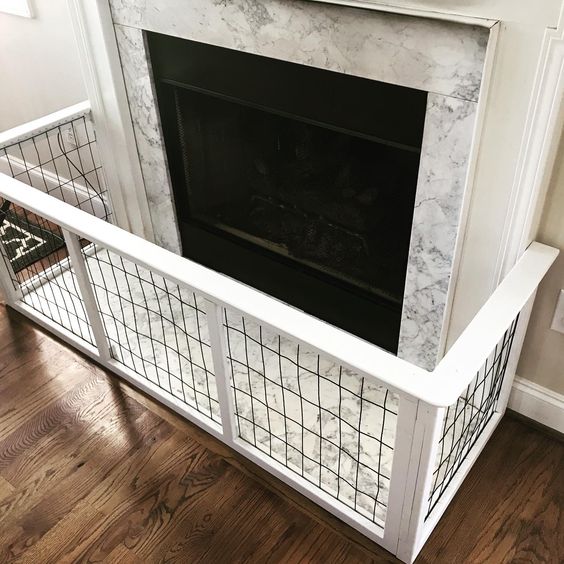
Image credit: mymomsanerd.com
A freestanding gate can create a clear stop line without fasteners in brick or stone. Choose a design wide enough to extend beyond the hearth edges, so a child cannot simply step around the sides.
For a DIY version, use a smooth, rigid panel or linked gate sections with a broad, stable footprint. Sand unfinished wood, cover exposed hardware, and keep gaps too small for a head, hand, or foot to become caught.
Test the setup from several directions before treating it as a barrier. If it slides, folds too easily, or can be pulled over, revise the base or choose a more secure configuration rather than adding loose weight to the gate.
Contain the Entire Fireplace Zone

Image credit: infanthouse.com
A configurable multi-panel gate is useful for wide hearths, uneven layouts, or fireplaces that sit near a corner. Its wraparound shape keeps the child away from the ledge as well as the opening, while leaving room for adults to access the area when needed.
In a rental, prioritize a layout that stands securely on the floor or uses approved pressure-mounted points rather than drilling into masonry. Do not force a tension-mounted gate against a fragile surface, loose trim, or an opening where it cannot brace evenly.
Place the gate far enough from the hearth that a child cannot reach through to grab an edge. Recheck its stability regularly, especially after furniture is moved or a panel has been opened.
Source: baby proofing fireplace hearth – Infant House
Use an Insert Cover as Backup

Image credit: reviewed.com
A barrier around the hearth handles access to the whole zone; an insert cover addresses the firebox itself. For an unused opening, a fitted rigid panel or purpose-made cover can help prevent reaching inside and can make the fireplace feel less like an invitation to explore.
Keep the cover clearly separate from any active fireplace equipment. Do not seal, block, or alter vents, gas components, electrical connections, or a fireplace that could be used by a future occupant without first getting written guidance from the landlord or a qualified professional.
Padding may soften an exposed corner, but it is an added layer rather than a substitute for supervision and a stable gate. Check adhesive pads often, since determined pulling or normal wear can loosen them.
Source: How to baby-proof your fireplace – Reviewed
Choose the least permanent setup that fully blocks your child’s access: a stable floor-based or properly pressure-mounted perimeter gate first, then a removable firebox cover if the opening remains reachable. Before installation, photograph the existing masonry and keep any landlord approval with your rental records.
Once everything is in place, get down at child height and try to spot reachable edges, gaps, and climbing aids. That quick check often shows whether the barrier needs to be wider, farther forward, or paired with a better furniture arrangement.
FAQ
Can I use a tension-mounted gate around a fireplace hearth?
It can work only where the gate has two solid, level surfaces to brace against and the manufacturer permits that installation. Do not tension-mount onto loose trim, uneven stone, or a fireplace opening without stable side supports.
Is fireplace padding enough for a toddler?
No. Padding may reduce the impact of a bumped edge, but it does not prevent climbing, reaching into the firebox, or pulling at loose materials. Use it only as a supplement to a stable barrier.
What should renters ask before covering a non-working fireplace?
Ask whether the fireplace is officially inactive, whether any vents or connections must remain accessible, and which temporary mounting methods are permitted. Get approval in writing before making changes.