


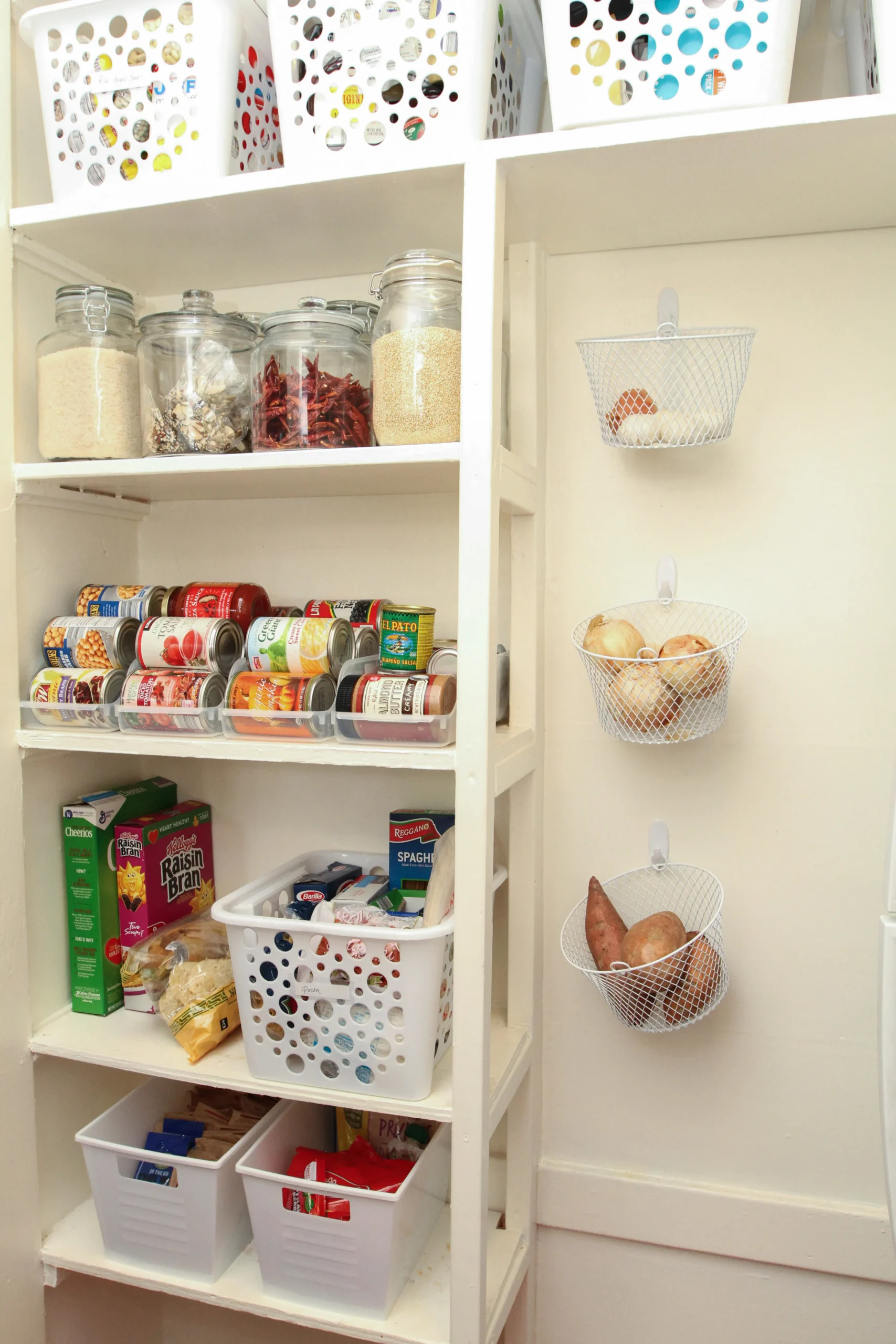


To setup home office lighting for a remote video panel presentation, place your main light in front of you and slightly to one side, rather than directly overhead or behind you. Raise it to around eye level or a little higher, then soften the beam so facial shadows stay gentle. In a tight space, the goal is not a complicated studio: it is an even, comfortable view of your face without screen glare, harsh contrast, or a bright window turning you into a silhouette.
Start with one controlled light, check your meeting preview, and add a second light only if one side of your face remains noticeably dark.
In this article
Start With a Soft Front Light

Image credit: blog.webex.com
Your key light should sit in front of your face, just off the laptop’s center line. Aim for roughly a 30- to 45-degree angle from either side, with the light slightly above eye level and tilted down gently. This gives your face shape without creating the deep under-eye shadows associated with ceiling lights.
Keep the lamp close enough to be useful, but outside the camera frame. If the light feels intense, move it farther away before increasing brightness. A little distance often makes the result more even and less tiring to look at.
Use the self-view window as a placement map: move the lamp a few inches at a time, then pause to see where shadows soften rather than disappear completely.
Source: The best lighting for video conferencing, according to experts | Webex Blog
Balance Desk Light and Daylight

Image credit: remtekworkplace.com
Daylight can be helpful if it reaches your face from the front or side. Sit facing a window where possible, or place the window at a slight angle. Sitting with a bright window directly behind you is harder for a webcam to handle and can leave your face underexposed.
In a small workspace, pair daylight with a modest desk lamp instead of relying on either source alone. The lamp can fill in shadows on cloudy days and keep your appearance steadier as outdoor light changes.
Watch for reflections in glasses and on the monitor. Turn the lamp outward a little, raise it above your line of sight, or shift it farther to the side until the bright reflection moves out of view.
Source: Home Office Lighting: Reduce Eye Strain & Fatigue
Use Two Lights Only With Purpose

Image credit: camo.com
A two-light arrangement can help if one front lamp leaves a pronounced shadow on the opposite side of your face. Put the brighter key light at the 30- to 45-degree position, then place a dimmer fill light on the other side. The fill should soften the shadow, not flatten every feature.
For a practical placement map, imagine your webcam at 12 o’clock. Set the key light at about 10 or 2 o’clock, and the fill at about 4 or 8 o’clock. Keep both lights above the screen edge, with the key usually higher than the fill.
Do not make both lamps equally bright by default. If the result starts to look washed out, lower or move back the fill light first.
Source: How to get the best lighting on video calls
Soften Harsh Lamps With Simple Materials
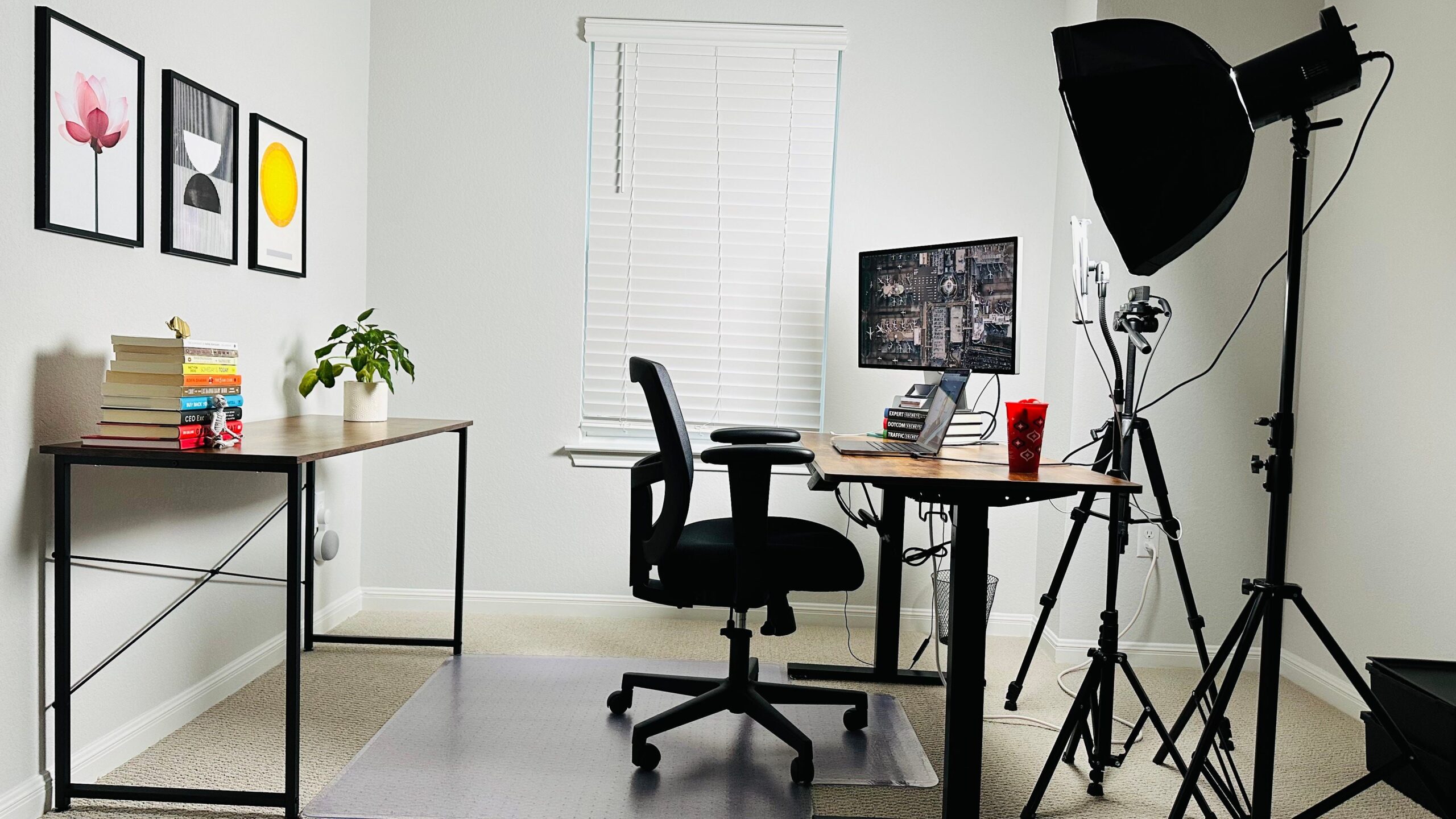
Image credit: anilg.blog
A bare desk bulb can create hard-edged shadows and a conspicuous hotspot on your forehead. Diffusion spreads that light across a larger area, making the transition between light and shadow more gradual. A lamp with a shade is an easy starting point.
If you need a temporary diffuser, place a white sheet of paper, a white fabric layer, or a translucent plastic folder in front of the light only when it is safely away from the bulb and cannot trap heat. Never cover a hot lamp, use flammable material near it, or leave a makeshift setup unattended.
You can also bounce light off a pale wall or a large piece of white card positioned beside the desk. Reflected light is weaker, but often gentler for panel discussions where a natural, even appearance matters more than maximum brightness.
Source: Simple Steps to Transform Your Home Office for Better Video Calls 🎙️
Control Glare Before Adding Brightness
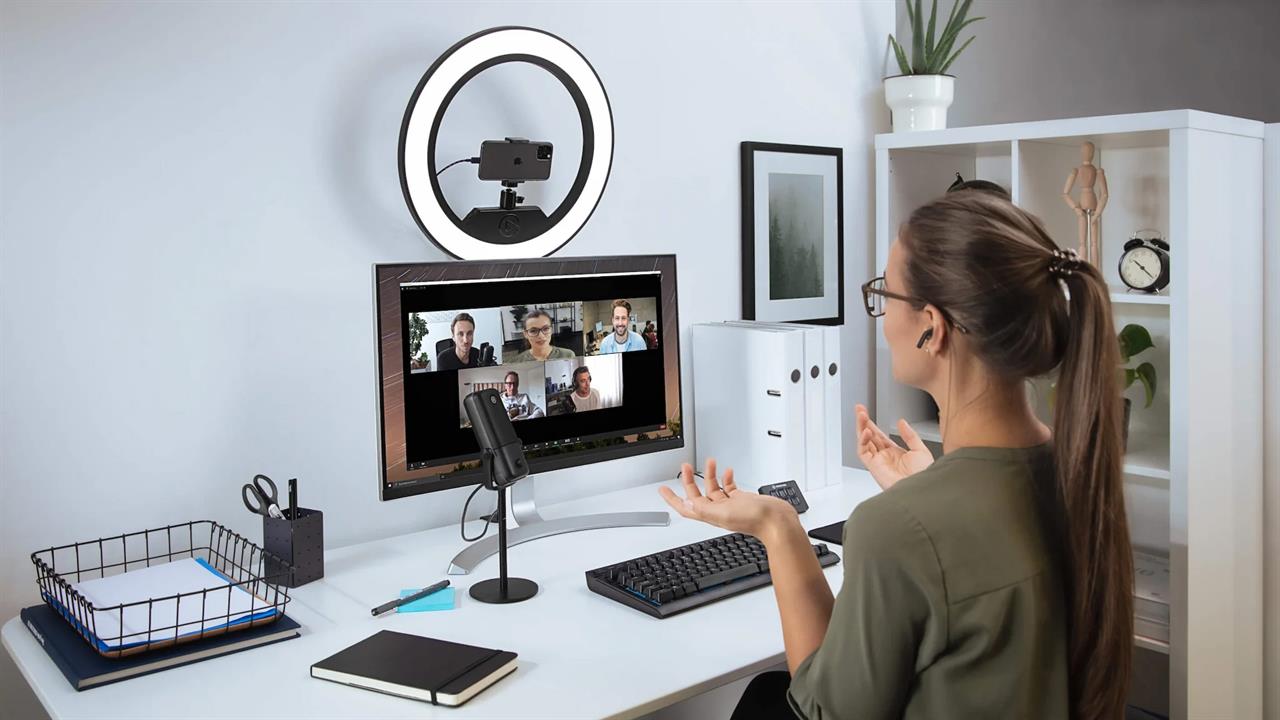
Image credit: microcenter.com
A ring light can work in a compact home office because it provides broad frontal illumination near the webcam. Position it just above or around the camera, then reduce output until your skin looks evenly lit rather than shiny. The closest, brightest setting is rarely the best setting for a long panel.
Glasses need special attention. Raise the ring light, tilt it slightly downward, or move it just off-center so its reflection is no longer prominent in the lenses. A small head tilt can help, but lamp placement is the more reliable fix.
Before joining, open your video preview with the same screen brightness and seating position you will use on the call. Check for glare on lenses, bright patches on the face, and distracting reflections behind you, then make one adjustment at a time.
Source: Top Video Lights for Zoom Meetings: Micro Center News
Set up your light before the day of the panel and save a simple routine: close or reposition the brightest window, place the key lamp at a front-side angle, soften it if needed, and check the preview for glare. Marking the lamp’s spot on the desk or floor makes the arrangement quick to repeat.
For the final check, record a short test clip. It will reveal changes in daylight, reflections, and facial shadows more clearly than a still preview.
FAQ
Where should a desk lamp go for a video panel?
Place it in front of you and about 30 to 45 degrees to one side, slightly above eye level. Avoid putting the main light behind you.
How can I diffuse a desk lamp safely?
Use a lamp shade, bounce the light from a pale wall, or use a suitable diffuser kept well away from heat. Never cover a hot bulb or block ventilation.
Why do my glasses glare on video calls?
The light is reflecting directly into the lenses. Raise the lamp, move it off-center, or angle it slightly until the reflection disappears from the camera view.
Is a ring light necessary for a remote panel presentation?
No. A shaded desk lamp or soft window light can work well. A ring light is one compact option if it can be dimmed and positioned to avoid glare.

