







To set up a small office desk for a virtual pitch presentation, give each essential tool one clear job: your screen frames the call, lighting keeps your face visible, notes sit close to the camera, and cables stay out of sight and out of the way. Start by clearing the desktop down to the devices and materials needed for the pitch.
Then build from the center outward. Raise the camera to eye level, position a light in front of you rather than behind, and use nearby vertical space for anything that does not need to remain on the work surface. A compact setup can still feel composed and credible.
In this article
Build a Clear On-Camera Zone

Image credit: oakywood.shop
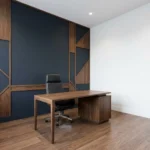
Begin with the area your audience will notice first: the space directly in front of you and behind you. Keep the desktop near the laptop or monitor simple, with only the presentation device, a notepad, water, and any necessary input tools within reach.
Place the screen squarely in front of your chair so you are not pitching while turned to one side. A neutral, orderly background helps the call feel less distracting, while a small personal detail can keep the setting from appearing sterile.
Before the meeting, open the video platform and check the frame. Remove items that pull attention away from your face, your posture, or the work you are presenting.
Source: Best desk setup for video calls (lighting, height, background) | Oakywood.shop
Create Space for Pitch Essentials
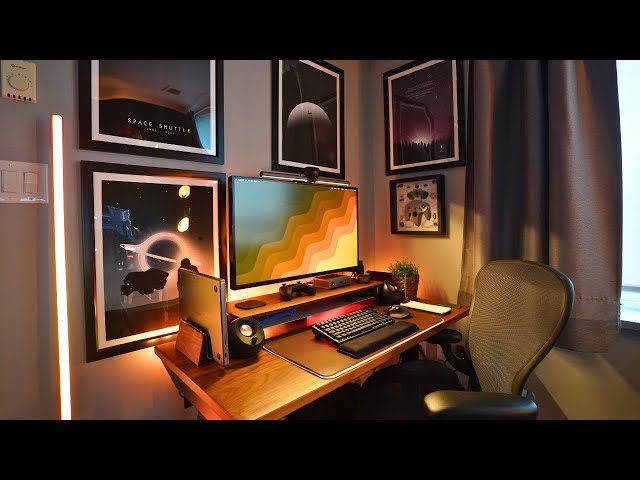
Image credit: youtube.com
A tight desk works best when its surface is divided into active and inactive areas. Reserve the center for the device running the call; keep your keyboard, mouse, and notes in the immediate working zone; move everything else off the desk or toward the edges.
Use the monitor or laptop stand, if available, to recover valuable surface area beneath the screen. A monitor arm can also free the desktop, but a simple stack of stable books can be enough to adjust viewing height for a one-time presentation.
Avoid filling every open patch of desk just because it exists. Open space gives you room to move naturally, set down a printed brief, and make a quick adjustment without creating a visible scramble.
Source: Small Office Desk Setup 2024 – Ideas For Your Workspace! – YouTube
Put Prompts Near Your Eyeline

Image credit: autonomous.ai
Place your camera at roughly eye level before arranging any talking points. Looking down at a low laptop can make eye contact harder and encourage a hunched posture; raising the screen helps you face forward during the conversation.
Keep prompts brief and position them as close to the webcam as practical. A small note just below the camera, or a concise outline on the upper portion of your screen, reduces the repeated downward glance that can make a speaker seem disengaged.
Write cues, not a full script: opening line, key proof points, questions to ask, and closing action. This leaves room for a natural delivery while ensuring important details do not get lost under pressure.
Source: Conquering the Corner: Small Office Desk Setup Solutions
Hide Cables Before the Call

Image credit: microflexspace.com
Run charging and display cables behind the desk rather than across the work surface. Gather cords that travel in the same direction with reusable ties or a cable sleeve, leaving enough slack that you can adjust the laptop or chair without tugging a connection loose.
Keep adapters, power strips, and spare chargers below the desk or in a nearby drawer where possible. The goal is not a showroom arrangement; it is a reliable layout that prevents a cable from crossing your notes, catching your hand, or becoming visible in the background.
Do a practical check before joining: plug in power, confirm the microphone and camera are recognized, and make sure no cable is under tension. Reliability is part of a calm presentation setup.
Source: home office solutions for small spaces: 10 Powerful Ways in 2025
Light Your Face Without Crowding
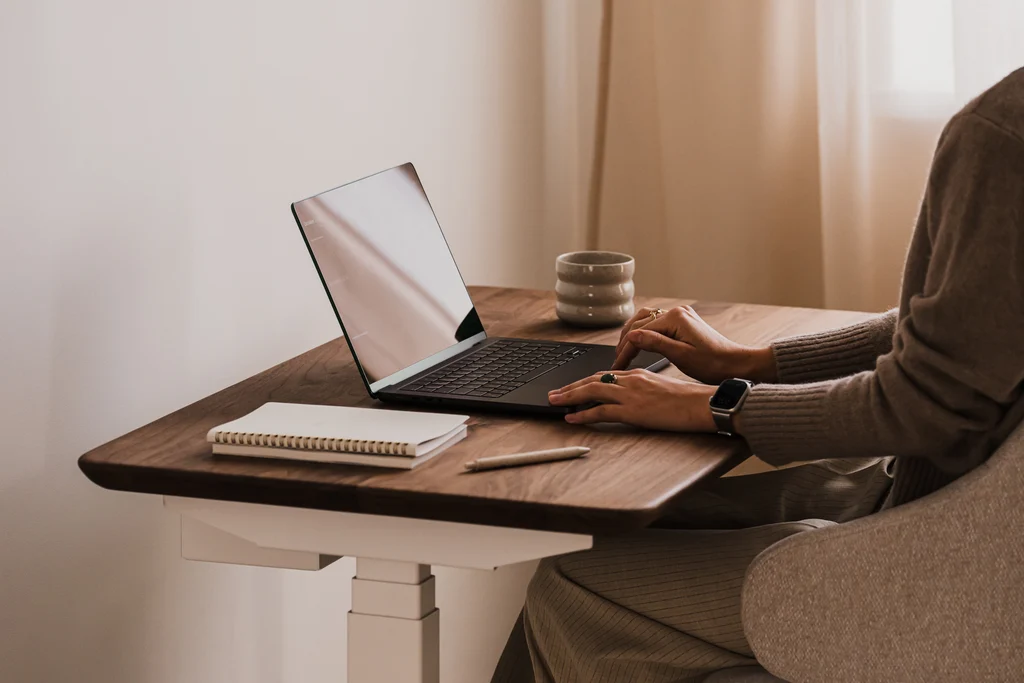
Image credit: oakywood.shop
Make light placement a priority on a small desk. Face a window if daylight is soft and even, or use a small lamp positioned in front of you and slightly to one side. Light from behind can leave your face in shadow, even in an otherwise bright room.
Set a compact light at or just above eye level, outside the camera frame, and angle it toward your face rather than directly into your eyes. If the light looks harsh, soften it by bouncing it off a pale wall or placing it farther away.
Keep the lighting footprint modest by choosing a clamp, shelf-mounted, or narrow-base option where suitable. Once the light is placed, check the preview screen and adjust brightness before the pitch starts—not while your audience is waiting.
Source: How to optimize space on a small desk? | Oakywood.shop
Set up the desk the day before if you can, then leave it largely untouched until the meeting. About 10 minutes before the pitch, test your internet connection, camera angle, microphone, presentation sharing, lighting, and prompt placement.
Keep one backup within reach: a charged phone, a printed outline, or a second way to access your slides. With the practical details settled, your attention can stay on the conversation and the case you are making.
FAQ
How high should my laptop be for a virtual pitch?
Raise it so the camera sits close to eye level. Keep the screen stable and position the keyboard separately if the height makes typing uncomfortable.
Where should I put notes during a virtual presentation?
Place short cue notes close to the webcam, such as just below the screen or beside the camera. Use keywords and transitions rather than a full script.
What is the best lighting position for a video pitch?
Use soft light from in front of you, slightly to one side and near eye level. Avoid placing the main light behind you, which can darken your face.
How can I manage cables on a small desk?
Route cables behind or beneath the desk, bundle related cords with reusable ties, and keep power adapters off the main work surface where possible.